
Information från Bokliv
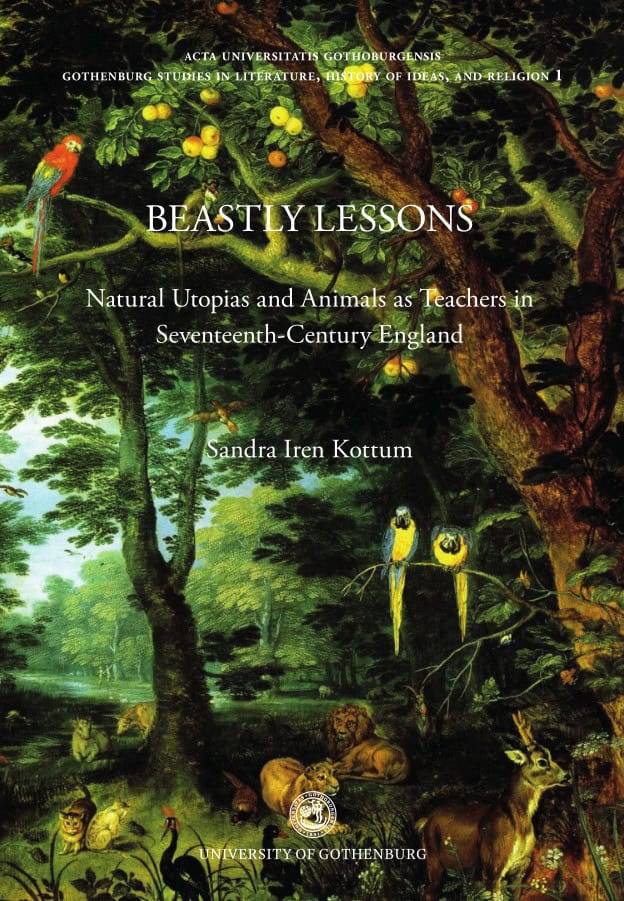
Om Beastly lessons : natural Utopias and animals as teachers in seventeenth-century England av Sandra Iren Kottum
Virtuösa djur och deras betydelse i litteraturen
Boken Beastly lessons : natural Utopias and animals as teachers in seventeenth-century England behandlar motivet av dygdiga djurinstruktörer i tre utvalda engelska texter från 1600-talet. Författaren Sandra Iren Kottum undersöker hur dessa verk erbjuder lösningar på de utmaningar som det tidiga moderna England stod inför, såsom inbördeskriget, framväxten av empirisk vetenskap och den påbörjade kolonisationen av Amerika.
Djur i litteraturen
Kottum analyserar James Howells The Parly of Beasts (1660), Margaret Cavendishs The Blazing World (1666) och Thomas Tryons The Way to Health (1683). Dessa författare föreslår att människors förbättring kan hittas i djurens rike, där de återupplivar theriophily, tanken att djur är överlägsna människor genom sin naturlighet. Studien introducerar begreppet naturlig utopi för att fånga författarnas sammansmältning av naturliga ideal med den utopiska impulsen som präglade England under sent 1600-tal.
Intellektuellt liv och djurens roll
Kottum framhäver hur djurkaraktärerna i dessa verk erbjuder en metaperspektiv på människans och djurens relation, kritiserar antropocentriska uppfattningar och lokala kulturella utvecklingar. Genom att kontrastera med etablerade genrer av djurlitteratur visar författaren hur dessa texter, trots sina variationer i form och innehåll, förenas i en grön, motkulturell protest mot den tidens ökande objektifiering och förstörelse av naturen.
Om boken
Bokförlag: Acta Universitatis Gothoburgensis. ISBN: 9789179630973. Bokserie: Gothenburg Studies in Literature, History of Ideas, and Religion. Omfång: 328 sidor. Språk: Engelska. Utgivningsdatum: 2022-05-06. Boken är ett häftat band.
Denna unika sammanfattning är skapad med hjälp av AI-stöd baserat på bokens källdata och verifierad information om författaren, för att ge dig som köpare mer sammanhang. Vi kontrollerar regelbundet våra texter och källor för att säkerställa hög kvalitet på informationen. (Läs mer)
Vanliga frågor om Beastly lessons : natural Utopias and animals as teachers in seventeenth-century England av Sandra Iren Kottum
Boken 'Beastly lessons' av Sandra Iren Kottum behandlar motivet av dygdiga djurinstruktörer i tre utvalda engelska texter från 1600-talet och undersöker hur dessa verk erbjuder lösningar på utmaningar i tidigt modernt England.
Centrala teman i 'Beastly lessons' inkluderar djurens roll som lärare, kritik av antropocentriska uppfattningar och en grön, motkulturell protest mot objektifiering och förstörelse av naturen.
Exemplaret av 'Beastly lessons' är en ny bok i häftat band, publicerad av Acta Universitatis Gothoburgensis, med ISBN 9789179630973 och ett omfång av 328 sidor.
Du gillar nog också ...
Senast besökt