Bindning: Häftat band
Bokförlag: Acta Universitatis Upsaliensis
ISBN: 9789151311210
Bokserie: Uppsala Studies in History of Ideas
Omfång: 226 s.
Språk: Engelska
Utgivningsdatum: 2021-03-13
Förlagets information
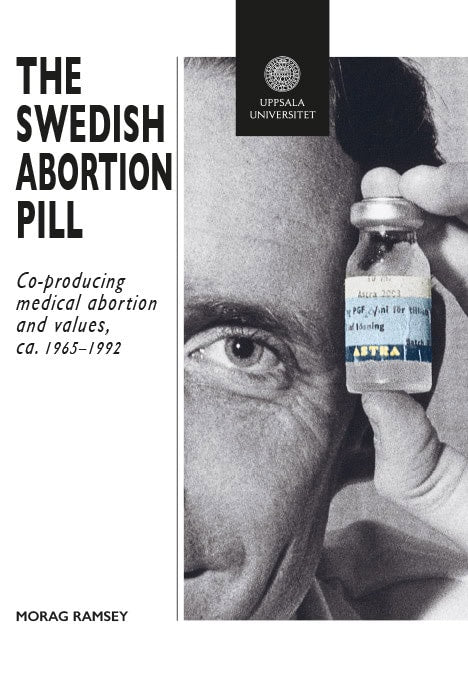
Abortion pills have had a large impact. Since their introduction to national markets in the 1990s, scholars have examined how abortion pills have changed medical practices, illegal abortion, and reproductive activism. What has gone unstudied, however, has been the development and the history of abortion pills. This dissertation addresses this gap by examining how abortion pills were developed in Sweden. What political, legal, and moral processes were included in their development? What specific conditions in Sweden helped to support this research and what was its impact? Answering these questions further develops scholarship on medical abortion as well as the history of the Swedish welfare state’s reproduction management. The dissertation argues that the development of abortion pills co-produced new ways of understanding and valuing abortion
Beginning in 1965, Swedish researchers clinically tested compounds on pregnant women, hoping to induce abortion. This dissertation follows abortion pill research in Sweden by concentrating on clinical trial practices in the period between 1965 and 1992. An intricate web of actors is highlighted, showing collaboration between state institutes, pharmaceutical companies, non-profit organizations, media, researchers, and trial participants. Using perspectives from science and technology studies and by introducing the concept of abortion scripts, the book traces how abortion was made in these expanding research networks. Whereas earlier scholarship has focused on contraceptive pills, intrauterine devices, and emergency contraceptives, this dissertation shows how abortion pills also contested reproductive concepts during the mid-20th century. Abortion pill research challenged reproductive boundaries, moved medical procedures from the hospital to the home, and expanded family planning initiatives.
As abortion access impacts people’s reproductive choices, it is important to understand how concepts of abortion are made. The Swedish Abortion Pill maps a multitude of abortion scripts, detailing both change and continuity over time and makes visible the extent of the practical work that went into the development of medical abortion. While the technology is often attributed to research done by French researchers, this study reveals that decades of work in Sweden also contributed to the success of abortion pills.