
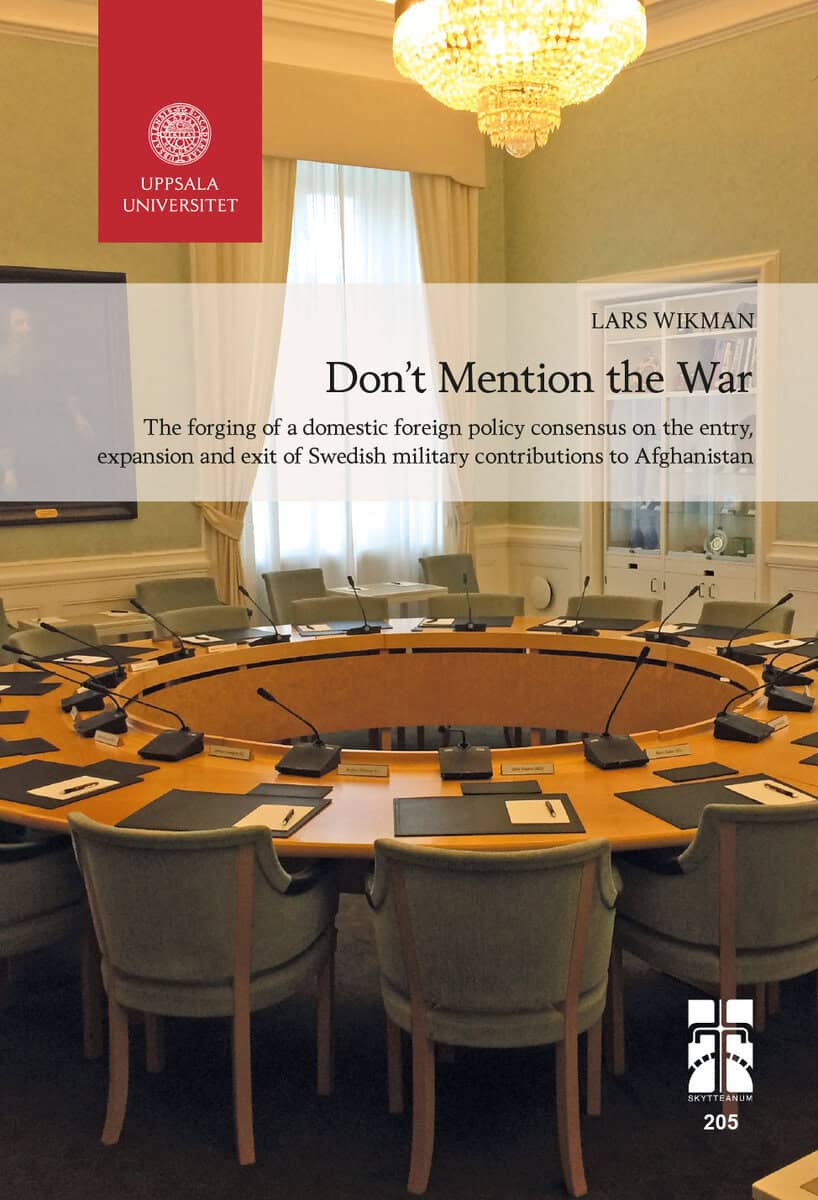
Lars Wikman (1981-)


Don’t Mention the War

─ The forging of a domestic foreign policy consensus on the entry, expansion and exit of Swedish military contributions to Afghanistan

Don’t Mention the War av Lars Wikman

Skick
Förlagsny bok
Häftat band
Häftad: mjuk pärm/pappersomslag. Kan vara limhäftad, trådhäftad eller klammerhäftad.
270 kr +55 kr frakt
Totalt 325 kr inom Sverige

Beställ fler nya böcker utan extra frakt.

Se fler böcker från Bokliv
  • Säljs och skickas av Bokliv
  • Beställningsvara. Skickas inom 3-21 vardagar.
Säker betalning via Bokliv 14 dagars ångerrätt

Bindning: Häftat band

Bokförlag: Acta Universitatis Upsaliensis
ISBN: 9789151311661
Bokserie: Skrifter utgivna av Statsvetenskapliga föreningen i Uppsala

Omfång: 324 s.
Språk: Engelska
Utgivningsdatum: 2021-05-12

Förlagets information

Consensus is not something that just happens in the foreign policy domain when political actors seemingly agree on a policy. Rather, in this dissertation I demonstrate that actors construct consensus through the framing of policy as they highlight and downplay certain elements. Interestingly, for consensus to emerge, the attraction of political support is not always necessary; sometimes it is enough to not mobilize opposition. In the Swedish context a “foreign policy line” [utrikespolitisk linje] captures the prevailing consensus view and embraces a particular understanding of foreign policy in the national interest, historically conditioned and elevated above party politics. Based on archival records and 55 interviews, this dissertation explores and analyzes the political process in which a domestic foreign policy consensus was constructed for the entry, expansion and exit of the Swedish military contributions to Afghanistan in the early 2000s.

Advocates and opponents frame their preferred policy with the intention of aligning it with a dominating perception of the continuity of Swedish foreign policy to gain wider acceptance. In the case of military contributions to Afghanistan, distancing themselves from sensitive issues such as the US warfare and framing policy so it resembled traditional Swedish foreign policy was a way for advocates to suppress political conflict within the political left and rally support behind the respective government's proposition. Afghanistan was a defining military operation at a pivotal time for Swedish foreign policy. The results therefore have wider implications for our understanding of the domestic politics of Swedish foreign policy, providing an important view of how a general reorientation following the Cold War was managed. In addition to conceptualizing the “foreign policy line” this study contributes theoretically with two frame alignment strategies, which actors employ when faced with an unfavorable context to avoid negative connotations.

Consensus is not something that just happens in the foreign policy domain when political actors seemingly agree on a policy. Rather, in this dissertation I demonstrate that actors construct consensus through the framing of policy as they highlight and downplay certain elements. Interestingly, for consensus to emerge, the attraction of political support is not always necessary; sometimes it is enough to not mobilize opposition. In the Swedish context a “foreign policy line” [utrikespolitisk linje] captures the prevailing consensus view and embraces a particular understanding of foreign policy in the national interest, historically conditioned and elevated above party politics. Based on archival records and 55 interviews, this dissertation explores and analyzes the political process in which a domestic foreign policy consensus was constructed for the entry, expansion and exit of the Swedish military contributions to Afghanistan in the early 2000s.

Advocates and opponents frame their preferred policy with the intention of aligning it with a dominating perception of the continuity of Swedish foreign policy to gain wider acceptance. In the case of military contributions to Afghanistan, distancing themselves from sensitive issues such as the US warfare and framing policy so it resembled traditional Swedish foreign policy was a way for advocates to suppress political conflict within the political left and rally support behind the respective government's proposition. Afghanistan was a defining military operation at a pivotal time for Swedish foreign policy. The results therefore have wider implications for our understanding of the domestic politics of Swedish foreign policy, providing an important view of how a general reorientation following the Cold War was managed. In addition to conceptualizing the “foreign policy line” this study contributes theoretically with two frame alignment strategies, which actors employ when faced with an unfavorable context to avoid negative connotations.


Don’t Mention the War av Lars Wikman hittar du under Krig och fred inom Internationell politik i huvudkategorin Politik | Samhälle.

Hitta fler liknande böcker med dessa ämnesord:
Sweden foreign policy consensus framing foreign policy line domestic politics ISAF Afghanistan peace support operations NATO.

Sök fler exemplar av denna titelSök fler böcker av Lars Wikman

Information från Bokliv

Om Don’t Mention the War av Lars Wikman

Inriktningar inom svensk utrikespolitik

Boken Don’t Mention the War : ─ The forging of a domestic foreign policy consensus on the entry, expansion and exit of Swedish military contributions to Afghanistan behandlar hur konsensus inom svensk utrikespolitik konstrueras genom ramverk och politiska diskurser. Författaren, Lars Wikman, analyserar den politiska processen kring Sveriges militära insatser i Afghanistan under 2000-talet, med fokus på hur aktörer formulerar och framhäver olika aspekter av politiken för att skapa enighet.

Framing och politisk konsensus

I boken utforskas hur aktörer inom det svenska politiska landskapet använder framing för att anpassa sina ståndpunkter till en dominerande uppfattning om svensk utrikespolitik. Genom att distansera sig från kontroversiella frågor, såsom USA:s krigföring, lyckas förespråkare för militära insatser samla stöd och minska politisk konflikt. Detta visar på vikten av att förstå hur politiska narrativ skapas och modifieras för att uppnå konsensus.

Utrikespolitisk linje och dess betydelse

Boken bidrar även med en konceptualisering av begreppet “utrikespolitisk linje”, vilket fångar den rådande konsensusuppfattningen och dess relation till nationella intressen. Wikman diskuterar hur denna linje har utvecklats historiskt och hur den påverkar Sveriges position i internationella relationer, särskilt i samband med ISAF och fredsbevarande operationer.

Om boken

Boken är häftad och publicerades av Acta Universitatis Upsaliensis den 12 maj 2021. Den omfattar 324 sidor och är skriven på engelska.

Denna unika sammanfattning är skapad med hjälp av AI-stöd baserat på bokens källdata och verifierad information om författaren, för att ge dig som köpare mer sammanhang. Vi kontrollerar regelbundet våra texter och källor för att säkerställa hög kvalitet på informationen. (Läs mer)

Recensioner

Laddar…

Logga in på mitt.bokliv.se för att lämna ditt omdöme!

Vanliga frågor om Don’t Mention the War av Lars Wikman

Boken analyserar hur konsensus inom svensk utrikespolitik konstrueras, med fokus på Sveriges militära insatser i Afghanistan under 2000-talet.

Centrala teman inkluderar framing av politiska diskurser och hur dessa påverkar enigheten kring svensk utrikespolitik, samt begreppet 'utrikespolitisk linje'.

Exemplet är häftat, publicerat av Acta Universitatis Upsaliensis den 12 maj 2021, omfattar 324 sidor och är skrivet på engelska.

Du gillar nog också ...

Senast besökt