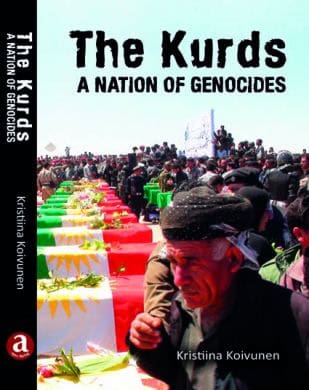
Kristiina Koivunen


The kurds

a nation of genocides

Koivunen, Kristiina | THE KURDS : a nation of genocides


BoklivArtikelnr: 9789186139711

Boken utforskar den kurdiska folkgruppens historia av fördrivning och folkmord, med fokus på dess påverkan på identitet och samhälle.

  • Utforskar kurdernas historia av folkmord.

  • En djupgående analys av kultur och identitet.

  • Utgiven som förlagsband.

Typ av bok:
Ny
Pris:
REA-pris250 kr

Beställningsvara. Skickas inom 3-5 vardagar.

Bindning: Förlagsband

Bokförlag: Apec Förlag
ISBN: 9789186139711

Omfång: 270 s.
Språk: Engelska
Utgivningsdatum: 2013-03-19

Originaltitel: The Kurds

Förlagets information

The history of the Kurds is a history of deportation, massacres, and genocides. The Dêrsim massacre, Halabja chemical bombing, and Anfal Campaign are the most famous examples. They are steps in a long process which started from 1839 when the autonomous Kurdish emirates were crushed by the Tanzimat program in the Ottoman state. This book presents an analysis of the Kurdish genocide process; how it has affected the Kurdish society? In the 1920s, the Kurds were at a proto-national level, moving towards national unity. But the genocides and partition of Kurdistan stopped this process. As a consequence, there was a movement back towards tribal and local rule, which aided Turkish and Iraqi governance of North and South Kurdistan. The process of cultural and linguistic genocide still continues in North Kurdistan. In South Kurdistan, there is, at this time, the danger of a new genocide in the Disputed Territories, especially in Kirkuk and Mosul.

The Kurds, A Nation of Genocides The history of the Kurds is a history of deportation, massacres and genocides. There are several books about them; the most famous cases are the Dêrsim massacre, Halabja chemical bombing and Anfal Campaign. But usually they are presented as independent cases without analyzing their connection to the whole process of the Kurdish genocides. Kristiina Koivunen’s book “The Kurds, A Nation of Genocides” is the first book which adopts a wider perspective on the Kurdish genocide process, seeing the starting point as 1839 when the autonomous Kurdish emirates were crushed by the Tanzimat program in the Ottoman state. Until that year, the Kurds lived in autonomy in the Ottoman state with their own legal and administration systems. How has the genocide process affected the Kurdish society? In the 1830s, the Kurds were at a proto-national level, moving towards national unity. The genocides and partition of Kurdistan in the 1920s stopped this process. As a consequence, there was a movement back towards tribal and local rule, which aided Turkish and Iraqi governance of Kurdistan. As the autonomy of sixteen Kurdish emirates had been destroyed in the Tanzimat period, the Kurdish leaders were unable to establish an independent country when the Ottoman Empire collapsed at the beginning of the twentieth century. The Kurdish question became a frozen conflict, which now melts. The genocide process still continues in Kurdistan. The process of cultural and linguistic genocide destroys the Kurdish language and identity in North Kurdistan (the Turkish part of Kurdistan). In South Kurdistan (the Iraqi part of Kurdistan), there is the danger that the genocide process will reach a peak in mass killings in the Disputed Territories, especially in Kirkuk and Mosul. The collapse of the Ottoman Empire was a historical opportunity to establish an independent country, but the Kurdish leaders could not use it. Since then, local uprisings have taken place somewhere in Kurdistan all the time. At the moment, a wave of changes blows in the Middle-East. The political situation is tense in all the countries which rule Kurdistan; Turkey, Iran, Iraq and Syria. The Kurds demand their rights in each of them – the situation is different than earlier in the sense that now there are uprisings in all parts of Kurdistan; but similar in the sense that they all still local. Cooperation with other Kurdish parties and movements is difficult for the Kurds, despite agreement about the need. This problem is one consequence of the genocide process; it stopped the national identity formation among the Kurds. While books about the Kurdish genocide usually document the atrocities and count bodies, Koivunen’s book has a wider perspective. It searches for answers to the question how the genocide process has affected the Kurdish society and identity.


The kurds av Kristiina Koivunen hittar du under Politisk historia inom Internationell politik i huvudkategorin Politik | Samhälle.

Sök fler exemplar av denna titelSök fler böcker av Kristiina Koivunen

Recensioner

Laddar…

Logga in på mitt.bokliv.se för att lämna ditt omdöme!

Vanliga frågor om The kurds av Kristiina Koivunen

Boken handlar om den komplexa historien om kurderna och fokuserar på deportationer, massakrer och folkmord som de har utsatts för, inklusive Dêrsim-massakern och den kemiska bombningen i Halabja.

Koivunen behandlar teman som folkmordets konsekvenser på kurdisk identitet, den historiska förlusten av självständighet, och den nuvarande politiska situationen för kurderna i Turkiet, Iran, Irak och Syrien.

Boken är ett förlagsband, omfattar 270 sidor, är skriven på engelska och publicerades av Apec Förlag den 19 mars 2013.

Du gillar nog också ...

Senast besökt