
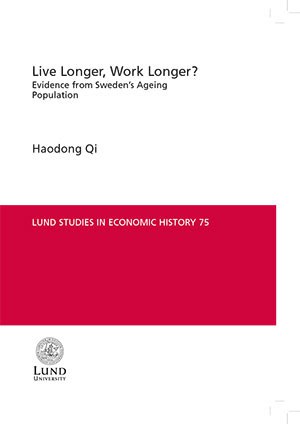
Information från Bokliv
Om Live longer, work longer? av Haodong Qi
Arbetsliv och utmaningar i en åldrande befolkning
Boken Live Longer, Work Longer? : evidence from Sweden’s ageing population behandlar de ekonomiska och sociala konsekvenserna av Sveriges åldrande befolkning. Författaren Haodong Qi utforskar hur den ökande andelen äldre, som följer av minskad dödlighet och konstant födelsetal, påverkar arbetsmarknaden och välfärdssystemet.
Ekonomisk historia och arbetsmarknad
Boken bidrar till diskussionen om arbetsmarknadens förändringar genom att undersöka trender i arbetsutbudet och de mekanismer som driver dessa förändringar. Resultaten visar att genomsnittlig arbetsinkomst har ökat bland äldre, och att yngre generationer i allt högre grad skjuter upp sin pensionering. Dessa förändringar är konsekventa över olika kön, yrken och utbildningsnivåer, men de bakomliggande orsakerna kan variera.
Pensioner och ekonomiska incitament
De fynd som presenteras i boken är viktiga för att förstå de välfärdsmässiga konsekvenserna av en åldrande befolkning och för att utveckla evidensbaserade policyalternativ. Författaren diskuterar också de utmaningar som välfärdsstaten står inför, inklusive behovet av att förlänga arbetslivet som en lösning på de ökande kostnaderna för pensioner och äldreomsorg.
Om boken
Boken är ett häftat band och publicerades av Media-Tryck som en del av bokserien Lund Studies in Economic History. Den omfattar 226 sidor och är skriven på engelska. Utgivningsdatumet är den 2 februari 2016.
Denna unika sammanfattning är skapad med hjälp av AI-stöd baserat på bokens källdata och verifierad information om författaren, för att ge dig som köpare mer sammanhang. Vi kontrollerar regelbundet våra texter och källor för att säkerställa hög kvalitet på informationen. (Läs mer)
Vanliga frågor om Live longer, work longer? av Haodong Qi
Boken behandlar de ekonomiska och sociala konsekvenserna av Sveriges åldrande befolkning, med fokus på hur den ökande andelen äldre påverkar arbetsmarknaden och välfärdssystemet.
Centrala teman inkluderar förändringar i arbetsmarknaden, ökande arbetsinkomster bland äldre, samt utmaningar för välfärdsstaten relaterade till pensioner och äldreomsorg.
Boken är ett häftat band, omfattar 226 sidor, publicerades av Media-Tryck den 2 februari 2016 och är skriven på engelska.
Du gillar nog också ...
Senast besökt