
Gustaf Forsell (1994-)


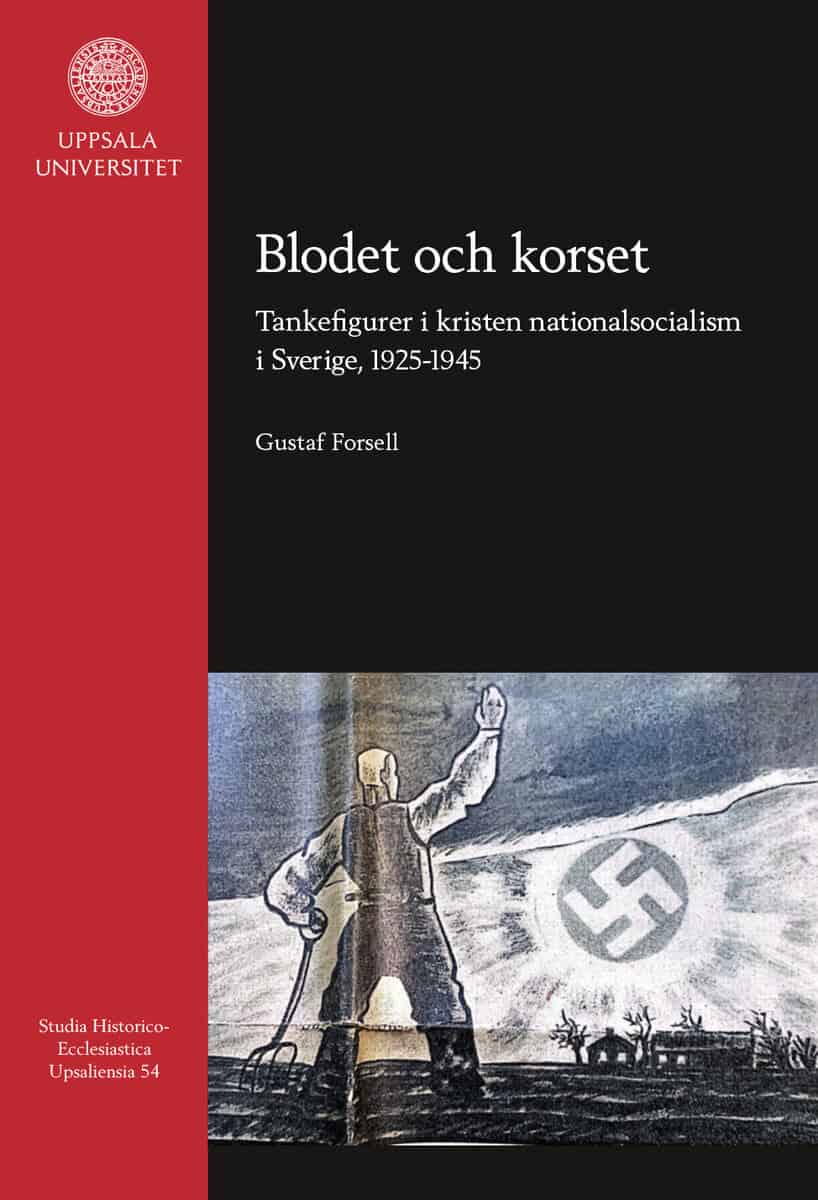
Blodet och korset : tankefigurer i kristen nationalsocialism i Sverige, 1925-1945

tankefigurer i kristen nationalsocialism i Sverige, 1925-1945

Forsell, Gustaf | BLODET OCH KORSET : TANKEFIGURER I KRISTEN NATIONALSOCIALISM I SVERIGE, 1925-1945 : tankefigurer i kristen nationalsocialism i Sverige, 1925-1945


BoklivArtikelnr: 9789151319711

Studien analyserar hur svenska nationalister mellan 1925 och 1945 integrerade kristna idéer i sin politiska agenda, med fokus på ras, kultur och teologi.

  • Analys av kristen nationalsocialism i Sverige.

  • Studie av ideologiska tankefigurer och deras kontext.

  • Utgiven som förlagsband, tryckt 2024.

Typ av bok:
Ny
Pris:
REA-pris330 kr

Beställningsvara. Skickas inom 3-21 vardagar.

Bindning: Förlagsband

Bokförlag: Acta Universitatis Upsaliensis
ISBN: 9789151319711
Bokserie: Studia historico-ecclesiastica Upsaliensia

Omfång: 435 s.
Språk: Svenska
Utgivningsdatum: 2024-02-05

Förlagets information

This dissertation outlines continuity and change in how national socialists in Sweden incorporated ideas of Christianity into their political project to establish a national socialist society from 1925 to 1945. The study includes national socialism into the political family of generic fascism – a genus of political ideology, often expressed as a worldview, whose mythic core in its various permutations is a palingenetic form of revolutionary, anti-egalitarian radical nationalism. The study focuses on Christian national socialism as a current within the Swedish national socialist landscape, showcasing a variety of conceptions pertaining to race, culture, society, history and theology. The study builds on a theoretical framework, which departs from ideas and their context being interrelated and that actors construe thought-figures (tankefigurer) in order to create order and coherence vis-à-vi their surroundings. The actors analysed in this dissertation are: the magazine The Nation, the political parties the Swedish National Socialist Party and the National Socialist Workers’ Party/Swedish Socialist Coalition, the organisation the Manhem Society, and the priests Ernst Ålander and Nils Hannerz. They sought in their political operations to reinforce ideas of a supreme but lost past followed by a degenerated present by desiring a struggle for a pervasive revolutionary national and/or racial revival. Ideas of Christianity were part of their racial interpretations of Swedish society – but in various ways, e.g. in how they related to Norse mythology. In conclusion, Swedish national socialists generally aspired, when issues regarding Christianity were concerned, a racial form of liberal theology interwoven with the Nordic racial soul and “liberated” from alleged Catholic and primarily Jewish elements. The national socialist state they sought to establish would include a folk church (folkkyrka) based on Jesus’ ethical teachings anchored in notions of Nordic racial supremacy.

This dissertation outlines continuity and change in how national socialists in Sweden incorporated ideas of Christianity into their political project to establish a national socialist society from 1925 to 1945. The study includes national socialism into the political family of generic fascism – a genus of political ideology, often expressed as a worldview, whose mythic core in its various permutations is a palingenetic form of revolutionary, anti-egalitarian radical nationalism. The study focuses on Christian national socialism as a current within the Swedish national socialist landscape, showcasing a variety of conceptions pertaining to race, culture, society, history and theology. The study builds on a theoretical framework, which departs from ideas and their context being interrelated and that actors construe thought-figures (tankefigurer) in order to create order and coherence vis-à-vi their surroundings. The actors analysed in this dissertation are: the magazine The Nation, the political parties the Swedish National Socialist Party and the National Socialist Workers’ Party/Swedish Socialist Coalition, the organisation the Manhem Society, and the priests Ernst Ålander and Nils Hannerz. They sought in their political operations to reinforce ideas of a supreme but lost past followed by a degenerated present by desiring a struggle for a pervasive revolutionary national and/or racial revival. Ideas of Christianity were part of their racial interpretations of Swedish society – but in various ways, e.g. in how they related to Norse mythology. In conclusion, Swedish national socialists generally aspired, when issues regarding Christianity were concerned, a racial form of liberal theology interwoven with the Nordic racial soul and “liberated” from alleged Catholic and primarily Jewish elements. The national socialist state they sought to establish would include a folk church (folkkyrka) based on Jesus’ ethical teachings anchored in notions of Nordic racial supremacy.

Recensioner

Laddar…

Logga in på mitt.bokliv.se för att lämna ditt omdöme!

Vanliga frågor om Blodet och korset : tankefigurer i kristen nationalsocialism i Sverige, 1925-1945 av Gustaf Forsell

Boken 'Blodet och korset' behandlar hur nationalister i Sverige integrerade kristna idéer i sina politiska projekt mellan 1925 och 1945, och analyserar hur dessa idéer bidrog till att forma en nationalsocialistisk samhällsstruktur.

Teman som utforskas inkluderar kristen nationalsocialism, relationen mellan kristendom och nazism, samt hur rasism och fascism relaterar till svensk nationalism.

Boken är ett förlagsband, utgiven av Acta Universitatis Upsaliensis med ISBN 9789151319711, omfattar 435 sidor och publicerades den 5 februari 2024.

Du gillar nog också ...

Senast besökt