Eva Zetterman (1957-)


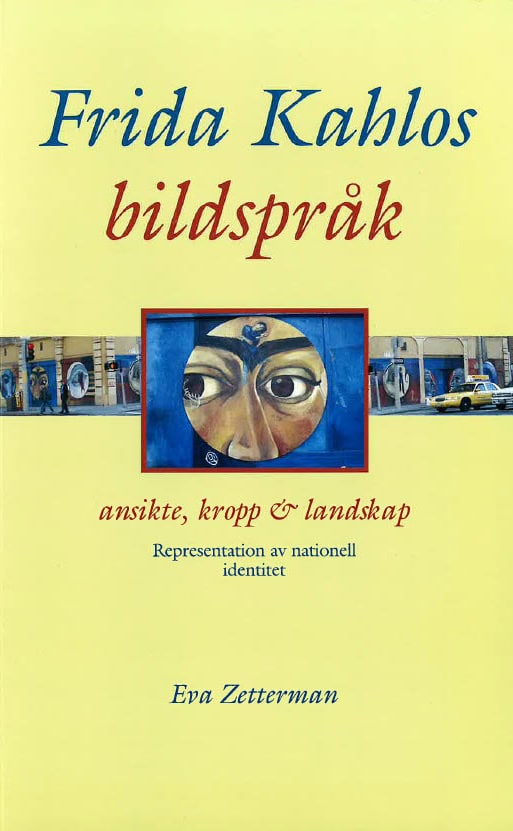
Frida Kahlos bildspråk : ansikte, kropp & landskap - representation av nationell identitet

ansikte, kropp & landskap

Zetterman, Eva | FRIDA KAHLOS BILDSPRÅK : ANSIKTE, KROPP & LANDSKAP - REPRESENTATION AV NATIONELL IDENTITET : ansikte, kropp & landskap


BoklivArtikelnr: 9789173464703

Boken analyserar Frida Kahlos självporträtt i relation till nationell identitet och kulturell kontext i Mexiko.

  • Utforskar Frida Kahlos bildspråk och identitet.

  • Analys av självporträtt i kulturell och historisk kontext.

  • Häftat band, utgiven 2003.

Typ av bok:
Ny
Pris:
REA-pris340 kr

Beställningsvara. Skickas inom 3-21 vardagar.

Bindning: Häftat band

Bokförlag: Acta Universitatis Gothoburgensis
ISBN: 9789173464703
Bokserie: Gothenburg Studies in Art and Architecture

Omfång: 371 s.
Språk: Svenska
Utgivningsdatum: 2003-09-01

Förlagets information

This thesis is about the Mexican artist Frida Kahlo (1907-1954) and her works, with emphasis on her painted self-portraits. The objective is to place Frida Kahlo's pictorial production in relation to a place and time specific context and test the theory of Frida Kahlo's self-portraits as a project connected to a gene ral striving towards a new formulation of national identity.

This thesis is about the Mexican artist Frida Kahlo (1907-1954) and her works, with emphasis on her painted self-portraits. The objective is to place Frida Kahlo's pictorial production in relation to a place and time specific context and test the theory of Frida Kahlo's self-portraits as a project connected to a gene ral striving towards a new formulation of national identity. The majority of Frida Kahlos pictorial production coincides with a historically delimited era in which there was a break from earlier role models and ideals, politically, culturally and ideologically. This phase was an artistically dynamic period with a redefining view of art and the history of the nation, a visualisation of the mythology and symbolism of the Indian cultures of origin, and an emphasis on the Indian ethnicity of the nation. Two chapters describe the ideological context in which Frida Kahlo's works were created. The visual markers around which the post-revolutionary national discourse came to revolve are identified and certain concepts related to race are examined. The subsequent chapters are devoted to Frida Kahlo's pictures. One chapter examines how her pictorial production in the 1920's emerged in a dialogue with contemporary art theory. One chapter deals with body thematics based on the naked female body, and elements of sex education are put in relation to an ongoing debate on sex education in Mexican schools. Thereafter new features are explored that are introduced in her self-portraits during the late 1930's and that came to be consistent features in her continued production of self-portraits. In the concluding section of the thesis, the self-portraits are discussed from a more general perspective. Some of the myths upon which earlier biographical interpretations were based are questioned. Instead, the thematics of suffering found in the self-portraits are related to the reconstruction of the nation's ethnic identity and problematic issues based on the 16th century Spanish Conquest of the indigenous Indian population. In her complex imagery, Frida Kahlo refers to a broad spectrum of disparate pictorial traditions, stylistic epochs, categories of motifs and symbolic imagery, and to historical, religious and mythical female personages such as Malintzfn, la Chingada, Sor Juana, and the Virgin of Guadalupe. These references from different epochs represent the two fundamental components of Mexico's cultural heritage — the Spanish and the Indian — and these are merged in Frida Kahlo self-portraits so that they thereby communicate a construction of identity based on a national heritage. The time perspective of the discussion reaches backwards to before the Spanish Conquest in the 16th century and forwards to the contemporary Chicana/Chicano movement north of the border to the United States.

Recensioner

Laddar…

Logga in på mitt.bokliv.se för att lämna ditt omdöme!

Vanliga frågor om Frida Kahlos bildspråk : ansikte, kropp & landskap - representation av nationell identitet av Eva Zetterman

Boken behandlar Frida Kahlos verk med fokus på hennes självporträtt och hur dessa reflekterar en strävan efter en ny nationell identitet i Mexiko under en förändrad konsthistorisk period.

Boken fokuserar på teman som kropp och identitet i Kahlos självporträtt och hur dessa verk utvecklades i dialog med samtida konstteorier.

Boken är ett häftat band, omfattar 371 sidor, är skriven på svenska och publicerades den 1 september 2003 av Acta Universitatis Gothoburgensis.

Du gillar nog också ...

Senast besökt