
Alva Stråge (1982-)


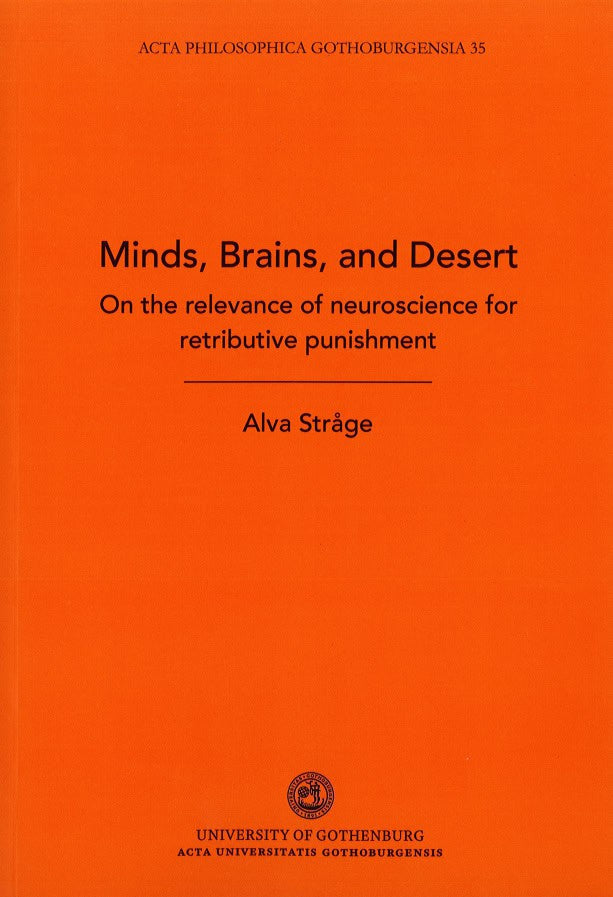
Minds, brains and desert : on the relevance of neuroscience for retributive punishment

─ on the relevance of neuroscience for retributive punishment

Minds, brains and desert : on the relevance of neuroscience for retributive punishment av Alva Stråge

Skick
Förlagsny bok
Häftat band
Häftad: mjuk pärm/pappersomslag. Kan vara limhäftad, trådhäftad eller klammerhäftad.
299 kr +55 kr frakt
Totalt 354 kr inom Sverige

Beställ fler nya böcker utan extra frakt.

Se fler böcker från Bokliv
  • Säljs och skickas av Bokliv
  • Beställningsvara. Skickas inom 3-21 vardagar.
Säker betalning via Bokliv 14 dagars ångerrätt

Bindning: Häftat band

Bokförlag: Acta Universitatis Gothoburgensis
ISBN: 9789173465304
Bokserie: Acta Philosophica Gothoburgensia

Omfång: 231 s.
Språk: Engelska
Utgivningsdatum: 2019-09-20

Förlagets information

It is a common idea, and an element in many legal systems, that people can deserve punishment when they commit criminal (or immoral) actions. A standard philosophical objection to this retributivist idea about punishment is that if human choices and actions are determined by previous events and the laws of nature, then we are not free in the sense required to be morally responsible for our actions, and therefore cannot deserve blame or punishment. It has recently been suggested that this argument can be backed up by neuroscience, since neuroscientific explanations of human behavior leave no room for non-determined free actions. In this thesis, an argument of this sort is discussed. According to this argument, that I call “the Revision Argument”, we should revise the legal system so that any retributivist justification of punishment is removed. I examine some objections to the Revision Argument according to which compatibilism about free will and responsibility is a morally acceptable basis of retributive punishment. I argue that these objections have difficulties in providing a plausible account of the relevant difference between people who deserve punishment for their actions and people who do not. Therefore, I argue that they fail to refute the conclusion of the Revision Argument.

It is a common idea, and an element in many legal systems, that people can deserve punishment when they commit criminal (or immoral) actions. A standard philosophical objection to this retributivist idea about punishment is that if human choices and actions are determined by previous events and the laws of nature, then we are not free in the sense required to be morally responsible for our actions, and therefore cannot deserve blame or punishment. It has recently been suggested that this argument can be backed up by neuroscience, since neuroscientific explanations of human behavior leave no room for non-determined free actions. In this thesis, an argument of this sort is discussed. According to this argument, that I call “the Revision Argument”, we should revise the legal system so that any retributivist justification of punishment is removed. I examine some objections to the Revision Argument according to which compatibilism about free will and responsibility is a morally acceptable basis of retributive punishment. I argue that these objections have difficulties in providing a plausible account of the relevant difference between people who deserve punishment for their actions and people who do not. Therefore, I argue that they fail to refute the conclusion of the Revision Argument.

Information från Bokliv

Om Minds, brains and desert : on the relevance of neuroscience for retributive punishment av Alva Stråge

Neuroscience and the Concept of Desert in Punishment

Boken Minds, brains and desert : ─ on the relevance of neuroscience for retributive punishment utforskar hur neurovetenskap kan påverka vår förståelse av straff och ansvar. Den diskuterar retributivism, en teori som hävdar att individer kan förtjäna straff för sina handlingar, och ifrågasätter om människor verkligen är moraliskt ansvariga för sina handlingar givet att dessa kan vara determinerade av tidigare händelser och naturens lagar.

Retributivism och dess utmaningar

Författaren Alva Stråge analyserar det som kallas Revision Argument, vilket föreslår att rättssystemet bör revideras för att avlägsna retributivistiska rättfärdiganden för straff. Boken granskar invändningar mot detta argument, särskilt de som stödjer en komptibilistisk syn på fri vilja och ansvar, och argumenterar för att dessa invändningar har svårt att förklara skillnaden mellan dem som förtjänar straff och dem som inte gör det.

Neurovetenskapens roll i moralfilosofi

Stråge diskuterar hur neurovetenskapliga insikter kan ge stöd åt argumentet för att människor inte har den friheten som krävs för att vara moraliskt ansvariga. Genom att undersöka hur våra handlingar kan påverkas av biologiska och miljömässiga faktorer, utmanar boken traditionella uppfattningar om ansvar och straff.

Om boken

Boken är häftad och publicerades av Acta Universitatis Gothoburgensis den 20 september 2019. Den omfattar 231 sidor och är skriven på engelska.

Denna unika sammanfattning är skapad med hjälp av AI-stöd baserat på bokens källdata och verifierad information om författaren, för att ge dig som köpare mer sammanhang. Vi kontrollerar regelbundet våra texter och källor för att säkerställa hög kvalitet på informationen. (Läs mer)

Recensioner

Laddar…

Logga in på mitt.bokliv.se för att lämna ditt omdöme!

Vanliga frågor om Minds, brains and desert : on the relevance of neuroscience for retributive punishment av Alva Stråge

Boken utforskar hur neurovetenskap kan påverka vår förståelse av straff och ansvar, särskilt inom ramen för retributivism.

Teman inkluderar retributivism, det moraliska ansvaret, Revision Argumentet och neurovetenskapens inverkan på moralfilosofi.

Boken är häftad, publicerad av Acta Universitatis Gothoburgensis den 20 september 2019, omfattar 231 sidor och är skriven på engelska.

Du gillar nog också ...

Senast besökt